Meet Two Oils That Bring a Finishing Touch to Hair Care
Some hair-care ingredients attract attention because of how naturally they fit into a beauty ritual. Argan oil and walnut oil are two such ingredients, often associated with softness, shine, and a more polished hair finish.
But what do these oils actually contribute to hair care?
Understanding their role helps separate realistic expectations from exaggerated beauty claims.
Argan Oil: The Smoothing Essential
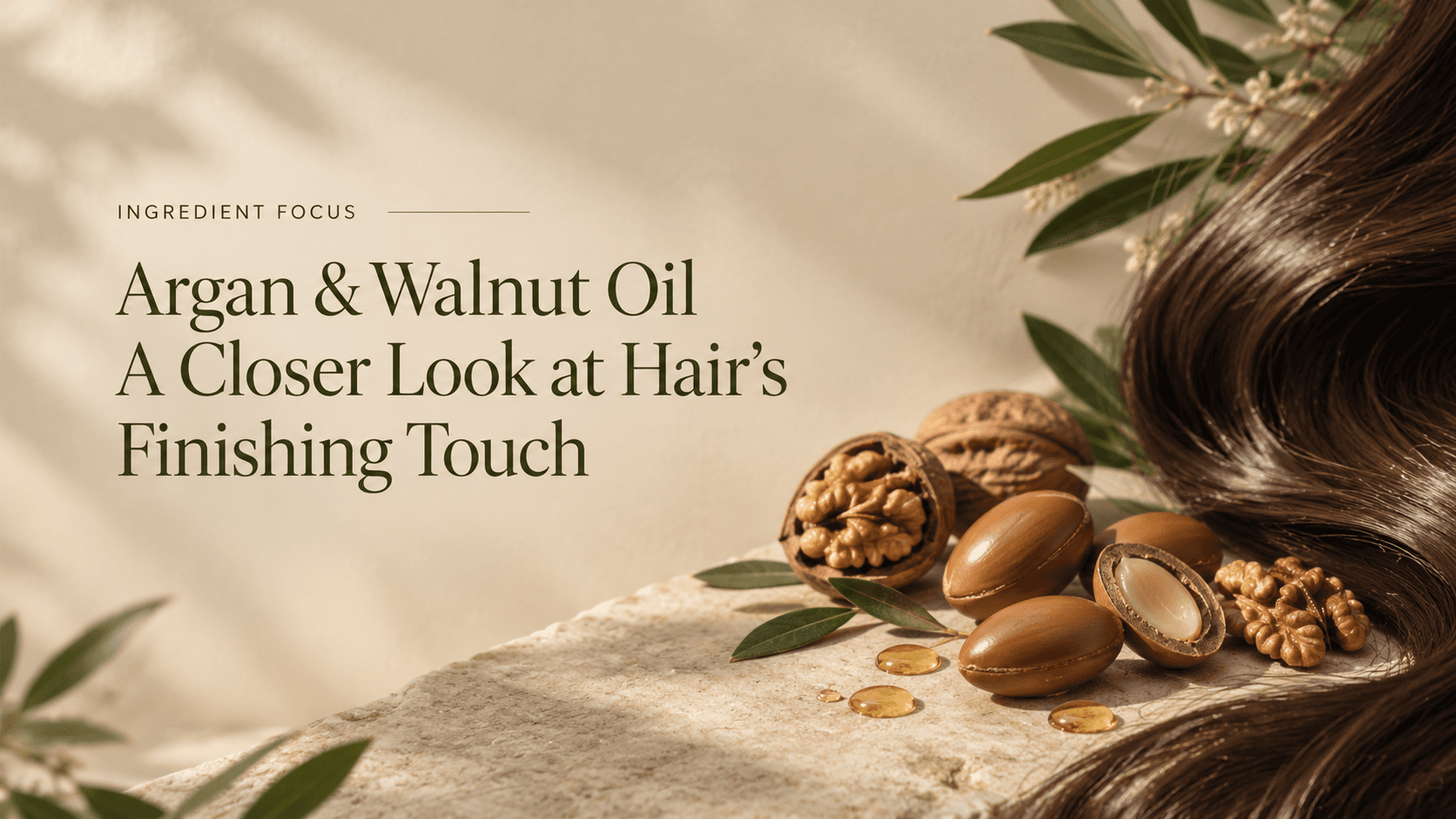
Argan oil is obtained from the kernels of the argan tree, which grows primarily in Morocco. It contains a combination of fatty acids and other naturally occurring compounds, including tocopherols.
In hair-care formulations, oils such as argan oil can help condition the hair's surface. Depending on the formula and amount used, this may help reduce friction, improve the feel of the hair, and enhance visible shine.
This is particularly appealing when hair looks rough, feels difficult to manage, or appears dull.
The result depends on more than the ingredient itself. The concentration used, the other ingredients in the formulation, and the way the product is applied all influence the final experience.
Walnut Oil: Another Botanical Addition
Walnut oil is another plant-derived oil containing fatty acids. Like other cosmetic oils, it can serve an emollient role in a suitable hair-care formula.
Emollients help soften and smooth the feel of the hair's surface. Depending on the formulation, this can contribute to a more manageable appearance and a smoother finish.
However, botanical ingredients are not automatically suitable for everyone. People with known walnut allergies should check the product's full ingredient declaration and seek appropriate professional guidance before use.
What Can Hair Oils Actually Do?
Let's look at some realistic expectations.
Help Improve the Appearance of Frizz
Hair can appear frizzy when strands do not lie smoothly together. A suitable serum or oil-based formulation may help smooth the hair's surface and reduce the appearance of flyaways.
Enhance Visible Shine
Hair reflects light from its surface. When the surface appears smoother, hair can look glossier and more polished.
Support Manageability
Some formulations help reduce friction between strands, making hair feel easier to comb or style. Results vary with hair texture, damage, and product formulation.
Add a Finishing Step to Your Routine
A hair serum can be useful when you want a polished look without adding several products to your styling routine.
It is important to remember that oils and serums do not permanently repair split ends or guarantee new hair growth. Their benefits are generally cosmetic, focused on the appearance and feel of hair.
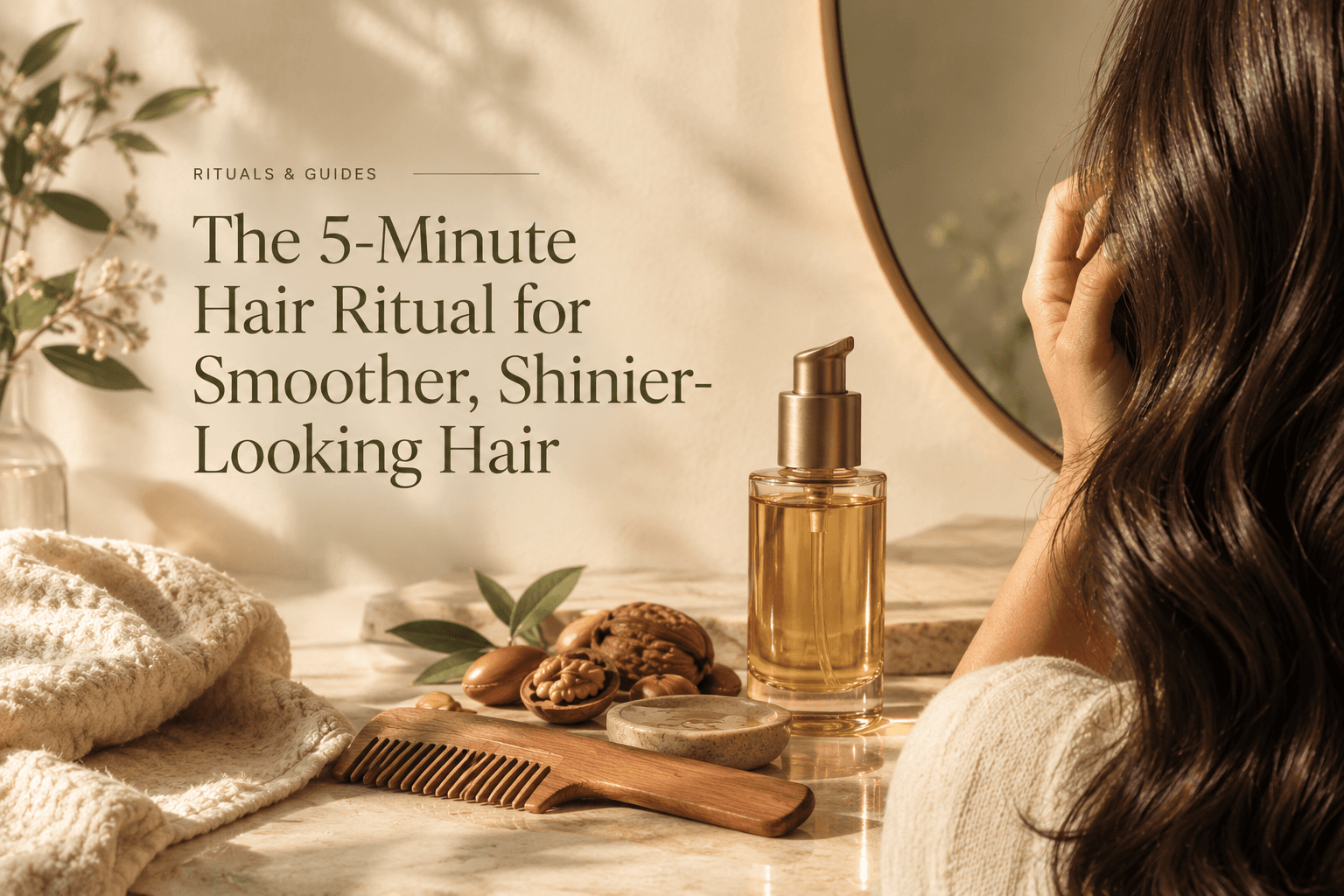
How to Use an Oil-Based Hair Serum Thoughtfully
The right quantity matters.
Start with the amount recommended on your product label. Distribute the serum evenly through the mid-lengths and ends, where dryness and visible frizz may be more noticeable. Avoid applying it to the roots unless the directions specifically recommend this.
Using too much product can leave some hair types looking heavy or greasy. Fine hair, in particular, may need a smaller amount than thick or coarse hair.
The aim is not to coat every strand with product. It is to use enough to achieve your desired finish.
Introducing MAYSHA Shine Hair Serum
MAYSHA Shine Hair Serum combines argan and walnut oils in a lightweight, non-sticky formula designed for everyday hair care.
Its stated benefits focus on three familiar hair-care goals: tangle-free, frizz-free, and shiny-looking hair.
Used as directed, the serum provides a simple finishing step for hair that needs a smoother, more manageable appearance.
As with any cosmetic product, individual results can vary according to hair type, styling habits, and the condition of your hair.
The Takeaway
Botanical oils can be valuable parts of a hair-care formulation, but their real value lies in how the finished product performs.
Argan oil, walnut oil, and other conditioning ingredients can contribute to a more polished appearance when formulated appropriately.
Choose products based on your hair's needs, use them in suitable quantities, and look beyond ingredient trends to understand what a product is actually designed to do.
Thoughtful hair care is not about using more. It is about choosing what works for you.